 About Ben
The Real Story
A career built through fire. Literally. From a chemical plant accident that changed everything, to a city hall, to the global infrastructure of one of the world's most recognized brands, to co-founding an AI company. Here is the unabridged version.
The fire that put me in technology
My technology career did not start with a job offer or a grand plan. It started with a chemical plant fire, a coworker who jumped ten feet off a mezzanine, and the realization that I could not keep doing what I was doing if I wanted to be there for my family.
I went to college wanting to be a music teacher. Then Oregon started eliminating music programs from schools, and that door closed before I could walk through it. In my first year I pivoted to Computer Science and Business Management, with music continuing as electives. I kept singing. I played the Pharaoh in a college production of Joseph and the Amazing Technicolor Dreamcoat, in an Elvis costume, which was exactly as memorable as it sounds. But the practical path was technology and business, and I committed to it fully.
Fresh out of college, I landed a contractor role at HP, and two weeks later they had a massive layoff. I was out the door. I had just gotten married. We had rent. I needed income fast. I found a job as a Chemical Operator at a pharmaceutical startup, drawing on the advanced chemistry I had taken in high school and my college coursework. It paid well. We started a family.
Then came the first incident. I walked into the work area and a caustic lachrymator was in the air, odorless, invisible, and immediately in my eyes. The pain was unlike anything I had experienced. My wife called every eye doctor in town at 2 in the morning until one agreed to meet us. I was blind for two weeks. Three months later, it happened again. I recognized the sensation the moment I walked in. It did not matter. I went through it again.
A year after that, I was working with a large-batch chemical process when a new molecule proved unstable. It caught fire, igniting the solvent, and a flame came directly at me through the manway opening. I saw it coming and jumped. It was not enough. I received second-degree burns across my entire face, part of my chest, and my arms. A coworker saw what happened, jumped down off a ten-foot mezzanine, and got me under a safety shower. His actions are the reason I am here. Because I was wearing eye protection and because of what he did, my eyes and my life were preserved.
I went to a surgeon's office every day for nearly two weeks to have my burns debrided and dressed. My hair grew back. I made a full recovery. My company asked me not to come in until I had healed. A few coworkers had seen me and it had shaken them. I understood.
I could not go back to doing that job. I had a family. So I looked around at what the company actually needed, and they needed someone who understood technology. I made myself that person.
While I recovered, I started writing standard operating procedures and volunteering to fix the computer and networking problems piling up around the building. I had studied computer science and Cisco networking in college and none of it had been used yet. I used it. Quietly at first, then consistently, until the company created a full-time position for me as their Network Administrator. In practice, I was their entire technology department for a pharmaceutical startup growing faster than its infrastructure.
That is how I got into technology. Not by choice in the comfortable sense, but by necessity and by will. I identified what was needed, made myself capable of providing it, and earned the role. I have operated the same way ever since.
Six years in public service, while building a technology career in parallel
In 2010 I was appointed to the City Council of Jefferson, Oregon, and won the seat outright when I stood for election. It was the first time I had held public office, and it changed how I think about leadership permanently.
Jefferson had a problem that no budget line could fix. Community leaders and city officials who should have been collaborators had been at odds for years. That friction was the real reason the city had stalled: not a lack of resources or ambition, but an inability to get people pointed in the same direction. I made it my focus to change that.
It worked. Once people who had been opposed started working together, things that had felt impossible became straightforward. We delivered new Public Works facilities, the city's first formal Emergency Plan, meaningful budget savings, and the revitalization of historical landmarks the community had stopped believing it could afford. None of it required a tax increase. All of it required trust.
"When the retiring Mayor, my fellow Councilors, and community leaders asked me to run for Mayor, it wasn't because I had the most political experience. It was because I had broken a logjam that had been there for decades, and they believed I could do the same thing at a larger scale."
— Ben Pickett
I ran. I won. And as Mayor from 2013 to 2016, the same approach produced results: earn trust first, then execute. that other Oregon cities came to study:
Built a new City Hall. Paved every aging street in the city. Modernized internet connectivity through a partnership with the school district and local businesses.
Improved policing service coverage. Updated city building codes. Spearheaded the land purchase and fundraising campaign for a new public library, ensuring it would serve Jefferson for generations.
Directed the Jefferson Village Choir. Led the annual Mint Festival and community gatherings. Recruited volunteers and raised funds for city organizations.
Worked directly with a U.S. Senator to secure highway signage and federal support for the All Nations Native American Veterans Memorial in Jefferson.
One decision I am particularly proud of: I spearheaded the purchase of the land for Jefferson's new library and led the fundraising effort to make it a reality. The land choice mattered as much as the building. Had we placed it differently, it would have blocked City Hall and diminished both structures. Instead, Jefferson got a library that functions as a genuine community living room, a place where people gather and not just borrow books. It is functional and beautiful today because someone thought carefully about where it should stand and what it should mean to the town.
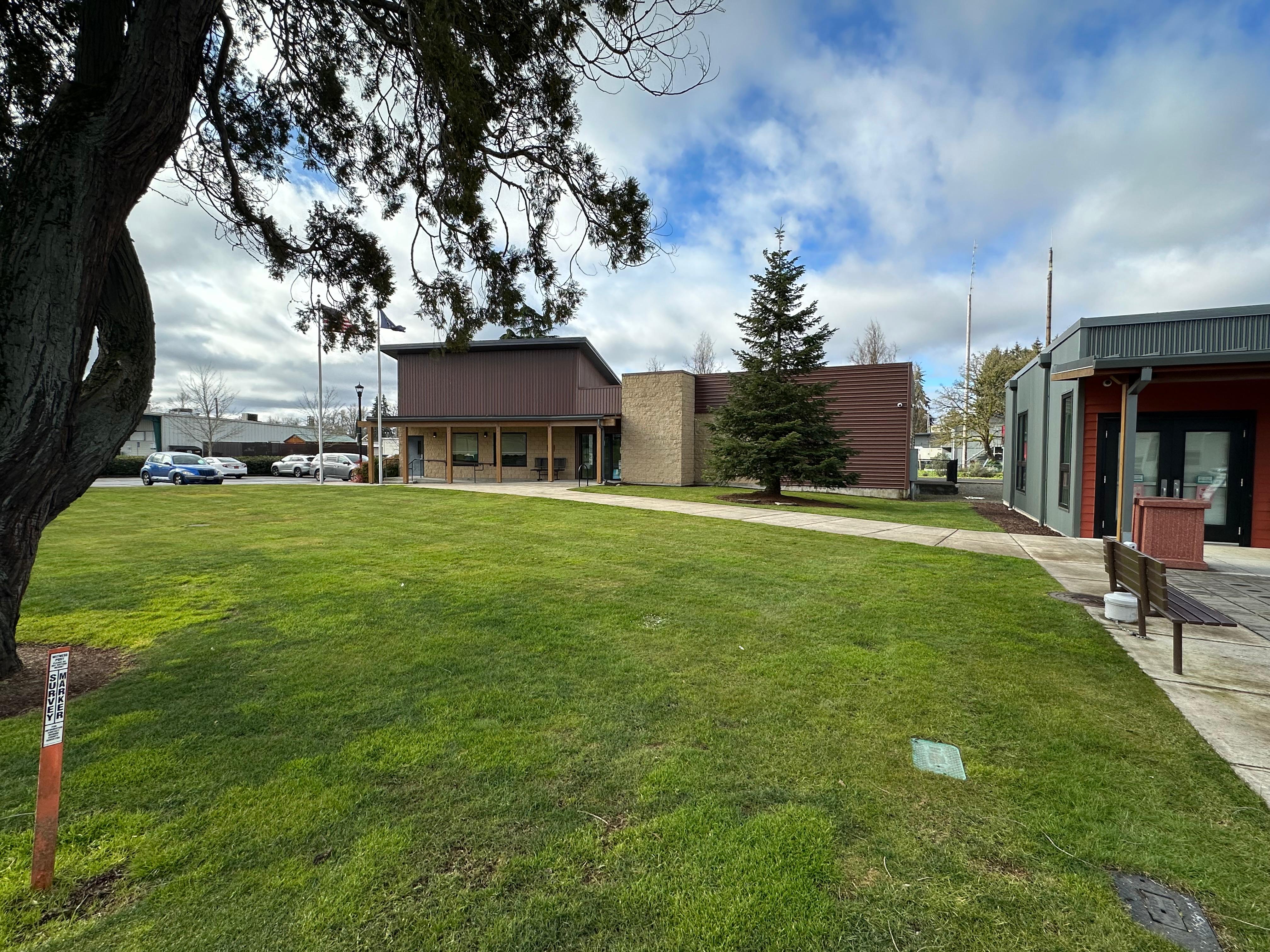
No tax increases. Utility costs held to inflation. A city that worked better in 2016 than it did in 2010. That is a proof point I carry into every leadership role I take on: the biggest obstacle is almost never resources. It is alignment. Fix the people problem first, and the hard things become possible.
PH Tech: jack of all trades, gatekeeper of the revenue engine
From February 2005 to December 2013 I was a Senior Database Administrator at PH Tech, a healthcare technology startup. In practice the title did not cover half of what the job actually was. I owned the full technology stack: database administration, networking, the website, mail systems, all infrastructure, and phone systems. When you are the technology department at a growing startup, the job description is whatever needs doing.
The most consequential part of the role was being the production gate for PH Tech's claims processing website, the system that generated the company's revenue. Nothing went to production without going through me first. That responsibility sharpened how I think about quality, reliability, and the relationship between engineering decisions and business outcomes. A bug in that system was not a technical inconvenience. It was a direct hit to the business. I treated it accordingly.
I finished my Bachelor of Science in Information Technology while working at the pharmaceutical startup, nights and weekends, while doing the job and recovering from everything that came with it. By 2008, working full time at PH Tech, I completed my MBA/TM, a Master of Business Administration with a concentration in Technology Management. For my keynote project I built a comprehensive business plan for PH Tech. They trusted me with the full picture: all financials, operations, strategy. My professor told me it was one of the best he had ever seen. PH Tech did not shelve it. They implemented the recommendations, grew revenue, and made targeted acquisitions that came directly from the plan. That project cemented something I already believed: the best technology leaders are not just engineers. They understand the business well enough to change it.
I kept going. I enrolled in a doctoral program, a DMIST, a Doctor of Management in Information Systems and Technology, one of the rarest doctoral designations in the field. I completed the coursework. I completed the research. I was down to one thing: submitting my dissertation. Then Nike called.
I chose Nike. It was the right decision and I have never second-guessed it. But I want to be clear about what that means: every framework, every methodology, every research foundation that goes into a doctoral program in organizational leadership and information systems. I did that work. The letters after my name do not reflect it. The way I lead does.
The civic chapter, City Councilor from 2010 and Mayor from 2013, ran concurrently with this role. Not after it. So did the choir directing. These were not sequential chapters. They were parallel commitments, all running at the same time, each making the others stronger.
Nike: from contractor to "do whatever you want"
I joined Nike in December 2013 as a contractor. Eight months later, in August 2014, Nike hired me as a full executive. The way they framed it has stayed with me: "You can do whatever you want. You have made such an incredible impact that we believe whatever you choose, you will be successful."
I chose to build something from nothing.
There was no team. There was no budget. I identified a critical gap in Nike's digital development pipeline: Test Data Management and Service Virtualization. I set about fixing it. I secured the software funding from leaders across the organization and separately convinced others to fund my hiring plan. The result: a multi-million dollar software investment approved, a 17-person team of developers, product managers, and leads built from scratch, and our tools fully integrated into the development cycle for Nike.com and Nike's consumer apps: SNKRS, Nike Running, and the Nike Store. The entire investment was fully recovered in savings before the end of the following May. The software platform was renewed three times during my tenure. Organizations renew what works.
The Test Data Management solution I built meant development teams could spin up a complete pre-production environment of masked, safe, meaningful Nike data in 39 minutes, refreshed on demand, any time, without waiting on anyone. What had taken 18 days became self-service.
On the Service Virtualization side, no one at Nike Digital was managing API contracts. We built the capability from the ground up: coaching teams to write proper API contracts, ensuring compliance with Nike's engineering standards, then using our custom application to automatically generate a fully functional, performance-testable mock from that contract, before the underlying code was ever written. Development teams no longer had to wait for a dependency to be built before they could test against it. The entire organization could move in parallel. At scale, automatically.
We were also the first team at Nike to implement Docker in our build and deployment pipeline. That approach was later picked up by teams across the organization.
Nike also came to me with a different kind of challenge. At different points I was asked to take on Storage and Enterprise Backup and Recovery, on top of everything else already on my plate. I had not run Enterprise Backup and Recovery at Fortune 100 scale before. I said yes anyway.
The assignment: roll out a newly purchased enterprise backup software product across Nike's entire global infrastructure fleet in under a year. No one expected that timeline to be real. The Senior VP at the time told me afterward: "I can't believe you did this so fast. We didn't expect you to complete this for years." We had 80 percent done in six months and the full rollout complete in ten.
I was also told there was no budget for a new support team. So I went and found one. I dug through every contract I had access to, worked with finance, and identified savings worth millions. I only asked back enough to fund the operational team I needed. The solution paid for itself before anyone noticed it was running.
From there, we extended the value of the platform further: our backup solution became the default standard for Nike's entire global Azure presence. Then we took on retail: over 1,000 Nike locations worldwide, fully automated backup to Azure. The enterprise backup platform was renewed twice during my tenure, because the organization could see what it had become.
I eventually rose to Global Director of Site Reliability Engineering, where my teams managed database, network, cloud, marketing technology, wholesale, and retail infrastructure across every geography Nike operates in globally. We maintained 99.99% uptime for Nike.com, not as a technical metric but as a promise to tens of millions of customers that their experience would work on the biggest days of the year, every single time.
The cumulative savings my teams delivered over my tenure exceeded $100 million, and that figure is conservative. The honest version is harder to quantify, because the work reached into every region, every platform, and every layer of how Nike's technology operates globally. Every geography Nike exists in from a technology standpoint has my fingerprints on it.
I became known at Nike as someone who could deliver enterprise projects at scale, by building the right relationships across the organization, applying deep technical judgment, and recruiting and developing exceptional people. Leaders would try to poach my team members. My team members stayed. That is the metric I am most proud of.
At a Nike leadership offsite with over a hundred senior leaders in the room, the Senior Vice President pulled me aside and said: "Ben, you're going to lead this entire org someday. Here's a tip for you." That was one of those moments you do not forget.
It did not work out that way. Nike and I parted paths in 2025. But looking back, I think that SVP was right about the capability and wrong about the destination. When that chapter closed, I did not go find another org to lead. I went and built one.
The AI chapter, in plain language
I have been working with AI tools in enterprise environments since before it was a headline. I have watched organizations spend fortunes on AI initiatives that never made it out of the proof-of-concept stage. I have also seen scrappy teams with modest budgets deploy AI that genuinely changed how their business operates.
The difference is almost never the technology. It is the strategy, the governance, and the willingness to make real decisions instead of deferring them.
In June 2025, I stepped away from a comfortable career to co-found Swa-AI, where I serve as COO. We are building AI infrastructure for enterprises that are tired of paying per-seat fees and handing their data to third parties. It is the hardest thing I have done professionally, and the most meaningful. It is also the most direct expression of something I have believed for a long time: AI should be yours. Your models. Your data. Your rules.
The first species downlisted in Oregon history
Around 2003–2004, I joined the Oregon Falconers Association as Vice President, helping revitalize an organization that had been struggling. We re-engaged the membership, modernized regulations with ODFW, and building the credibility needed to take on something that had never been attempted before. I went on to serve as President, and it was in that role that we initiated the peregrine delisting effort.
We had a retired biologist from the U.S. Fish and Wildlife Service who had done something extraordinary: a peer-reviewed, scientifically rigorous, book-length petition to delist the Peregrine Falcon from endangered to threatened in Oregon. The science was sound. The research was thorough. The problem was that none of it mattered if it never reached the ODFW commission.
Getting on the ODFW commission agenda was not straightforward. You cannot simply show up. You have to be granted an audience, and we were told that was not going to happen. Most people involved believed it was impossible. I did not accept that.
What I did was build a coalition. I reached out to hunting and fishing organizations across Oregon, including the Oregon Hunters Association and the Oregon Shooting Association, and told our story. I asked for their support. I was persistent and I was grateful for every organization that said yes. By the time we were done, we had letters of support from associations representing tens of thousands of Oregonians. That stack of letters, representing that many people, got the commission's attention. They granted us an audience.
Our retired biologist presented the petition. The science spoke for itself. ODFW then had a response window of approximately 90 days to determine whether to accept it and begin the formal delisting process. They accepted it.
I did not write the petition. That was a work of art in itself, and the credit belongs entirely to the biologist who spent years producing it. What I did was forge a path where none existed, one where most people said none was possible. I got the honor of making sure that work was finally heard.
Once ODFW accepted the petition, the process was in their hands. No further action was required from the OFA. We had done our part. I passed the torch to a new president and moved on. The official downlisting came after my tenure, as ODFW completed their process on their own timeline. The Peregrine Falcon was officially downlisted from endangered to threatened, the first species in Oregon history ever to be downlisted. It happened because a retired scientist did extraordinary work, and because enough people believed it deserved a fair hearing and refused to stop asking until it got one.
Combined membership: tens of thousands of Oregonians. Together they made it impossible for the commission to look away. Result: first species downlisting in Oregon history.
Music, falconry, and the things that shaped everything else
One thread runs through everything I have done, public service, enterprise technology, conservation, community organizing, music: I tend to show up, earn the room, and eventually get asked to lead. Not because I seek the title, but because I care enough to do the work properly.
The music chapter started in college and ran for years. While I was still a student, I was recruited to direct a church choir, leading adults as a young man, learning what it takes to get a room of people with different abilities, different schedules, and different egos to produce something unified and beautiful on a hard deadline. I did that for about a year before I got married.
After college, I won a choir directing contest and was invited to guest conduct one of the ensemble's performances. That opened the door to a children's choir position at the Albany Presbyterian Church, where I eventually built something I am still proud of: a cross-generational music and choir ensemble, spanning children through adults, that became the featured music for the church's early morning service. I created it, led it, and developed it from nothing.
The role that tested my conducting most was directing the Sweet Home Singing Christmas Tree. Weeks of rehearsals. Singers of every age and skill level. A guest orchestra. Musicians who had their own ideas about how things should go. My job was to bring all of it together: keep everyone learning, keep everyone in tune, keep everyone on the same beat, and then deliver multiple community performances in the first weeks of December every year. The theater filled every night. Standing room only, regularly. The performances were a genuine community event, and the people in those seats came back because the show was worth coming back to.
Conducting a choir and managing an enterprise program are the same job with different instruments. You are coordinating people of different skill levels toward a shared performance, on a fixed deadline, in front of an audience that will know immediately if something went wrong. The discipline you build doing one transfers completely to the other.
Falconry deserves its own paragraph. I practice it with my son. Training a raptor requires patience, attention, and a kind of earned trust that cannot be faked or rushed. A falcon does not care about your roadmap. A falcon has opinions, and it will make them known. After a week of enterprise architecture debates, that is genuinely grounding.
Photography started as a prescription I wrote for myself. I needed to lose weight and I needed a reason to walk. So I picked a hobby that required it. There were a lot of starts and stops. Years of effort. My body fought me in ways I did not fully understand yet.
About three years ago it got serious. I could barely walk. I had significant foot problems and the doctor recommended surgery. The problem: my father had the same surgery and did not survive it. My older brother had the same surgery and developed a pulmonary embolism. I looked at the doctor and said no. I was going to find another way.
I talked to Nike runners, people who understood feet and movement and recovery at a level most people never reach. They gave me specific guidance on footwear and technique. I worked closely with my doctor to understand why my body was resisting weight loss the way it was. I addressed it systematically, the same way I would approach any complex problem: gather the right expertise, build a plan, execute it with patience, and do not quit when it gets hard.
Today my feet are healthy. I am jogging and working out regularly. I still walk and take photographs. The camera is still the reason I go out, and photography is still the practice that keeps me present, really seeing what is in front of me instead of just processing it. I have taken tens of thousands of photos over the years. The ones on this site are the ones that stopped me when I looked back at them.
I am a grandfather, which is better than any job title I have ever held. I read constantly. I cook. I live in Salem, Oregon, and I am healthier and happier today than I have been in a long time. It took a while to figure out my body. I got there.